Water is one of those things most of us take for granted until something seems wrong. Maybe your tap water has an unusual smell, your shower leaves behind stubborn mineral deposits, or your drinking water suddenly tastes different. Sometimes the problem is obvious, but in other cases, water quality issues can go unnoticed for years. The good news is that understanding your water and choosing the right treatment can make everyday life more comfortable and help protect your plumbing.
A reliable water system doesn’t necessarily mean buying the most expensive equipment available. It starts with understanding what’s actually in your water, identifying your household’s needs, and choosing solutions that address those concerns without unnecessary complications.
Start With Knowing What’s in Your Water
Before investing in water treatment equipment, take time to understand your water quality. Municipal water supplies are generally treated and monitored, but their mineral content and characteristics can vary from one area to another. Homes that depend on private wells may face additional challenges, including naturally occurring minerals, sediment, bacteria, or other contaminants.
Clear water isn’t always clean water, either. Some substances that affect safety, taste, or plumbing won’t change the appearance of water at all. That’s why testing is more useful than guessing based on smell or appearance alone.
Homeowners can begin with test kits & accessories to check selected water characteristics, such as hardness, pH, chlorine levels, or certain other parameters. These kits are helpful for routine checks and identifying possible concerns. However, their capabilities vary, and they don’t test for every contaminant. If you’re concerned about bacteria, lead, arsenic, nitrates, or another health-related issue, consider using an accredited laboratory and selecting tests appropriate for your water source.
For private wells, regular testing is particularly important. A change in taste, nearby flooding, construction, or damage to the well can all justify additional testing. The right information gives you a much clearer starting point.
Choosing a Treatment That Addresses the Real Problem
Once you understand your water quality, the next step is choosing a treatment method that fits the results. Different technologies solve different problems, and no single system removes every possible contaminant.
For example, sediment filters can capture particles such as sand and rust, while water softeners are designed to reduce hardness minerals. Activated carbon filters can improve taste and odor and reduce certain chemicals, depending on the filter’s design and certification. Reverse osmosis systems can reduce many dissolved substances when properly selected and maintained.
The important thing is to match the technology to the issue. Installing equipment without knowing what needs to be treated can waste money and create a false sense of security. A professional water treatment provider can help interpret test results, compare available options, and explain the maintenance each system requires.
It’s also worth checking product certifications and performance claims. Look for documentation that identifies which contaminants a particular unit has been tested to reduce. Broad promises such as “removes everything” should be treated with caution.
How Ultraviolet Treatment Fits Into Water Safety
Microorganisms can be a concern in some water supplies, especially private wells and other sources that haven’t been reliably disinfected. Ultraviolet treatment offers a useful approach to managing this risk without relying on continuous chemical disinfection.
UV (ultraviolet) systems expose flowing water to ultraviolet light at a specific wavelength and validated dose. When the equipment is correctly designed and operated, the light can inactivate many bacteria, viruses, and protozoa by interfering with their ability to reproduce and cause infection.
However, UV treatment has limits. It doesn’t remove dissolved minerals, heavy metals, salts, or most chemical contaminants. It also doesn’t make cloudy water suitable for treatment automatically. Suspended particles can shield microorganisms from the light, which is why appropriate prefiltration and good water clarity matter.
Installation and maintenance are equally important. The UV lamp needs to be replaced according to the manufacturer’s schedule, even if it still appears to be glowing. A functioning lamp isn’t necessarily delivering the required treatment dose. The quartz sleeve may also need periodic cleaning, and the system should be checked for alarms, flow limits, and other operating requirements.
For homes using well water, UV disinfection may be an important part of a broader treatment plan. Still, it shouldn’t replace testing or proper well maintenance. If a water sample shows microbial contamination, investigate the source and follow appropriate public health guidance rather than assuming a UV unit alone will resolve every underlying problem.
Why Consider a Whole-House Water System?
Some households only want better-tasting drinking water at the kitchen sink. Others want to address water quality throughout the property. The right choice depends on where the problem occurs and how the water is used.
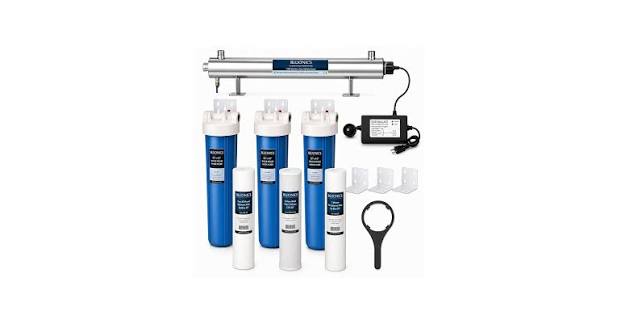
Whole house systems treat water as it enters the home, allowing the selected treatment equipment to serve multiple fixtures. Depending on the design, a system may include sediment filtration, carbon filtration, water conditioning, or other components chosen for specific water quality concerns.
This can be especially useful when sediment affects several taps, chlorine odor is noticeable throughout the home, or particular water characteristics contribute to plumbing and appliance problems. Treating water at the point of entry may also reduce the need to install separate units at every faucet.
Still, whole-house treatment isn’t automatically the best option for everyone. Some contaminants require specialized equipment, and others may be better addressed at the point where water is consumed. For example, a system designed to improve general taste and odor may not be suitable for removing a particular dissolved contaminant. In that situation, additional treatment may be necessary.
System sizing matters, too. A unit that’s too small may restrict water flow when multiple showers, appliances, or taps are running. A properly sized installation considers household demand, incoming water pressure, the water test results, and the manufacturer’s recommended operating conditions.
Maintenance Is Part of the Investment
Even a high-quality water treatment system needs attention. Filters collect particles and eventually require replacement. UV lamps lose effectiveness over time, while water softeners may need salt replenishment and periodic checks. Other equipment can require cleaning, sanitizing, or scheduled servicing.
Neglecting maintenance can reduce performance and, in some cases, create additional problems. A clogged filter may restrict flow, for example, while a neglected disinfection system may no longer provide its intended level of protection.
Keep a simple record of installation dates, filter changes, test results, and service visits. It doesn’t have to be complicated. A note on your phone or a calendar reminder can prevent small tasks from slipping through the cracks.
Pay attention to changes in water pressure, taste, odor, and appearance, but remember that these signs don’t reliably identify every water quality issue. Periodic testing remains important, particularly when your household depends on a private well.
Making a Practical Choice for Your Home
Better water quality begins with sensible decisions, not an overwhelming list of equipment. Start by identifying your water source and testing for the issues most relevant to your location. Then compare treatment options based on verified performance, installation requirements, operating costs, and ongoing maintenance.
It’s tempting to look for one product that promises to solve everything, especially when water quality feels confusing. In reality, a carefully selected combination of treatments may work better than a complicated system with features your household doesn’t need.
Clean, dependable water supports daily routines in ways we rarely stop to notice, from preparing meals to taking a shower after a long day. By understanding your water, choosing suitable technology, and maintaining the equipment properly, you can build a water treatment setup that delivers practical benefits for years to come.