Most of us trust our water without thinking twice. It’s clear, it flows, it doesn’t smell strange most of the time—so it must be fine, right?
That’s usually the assumption. And for the most part, it holds up. But every now and then, something feels slightly off. Maybe your tea tastes different. Maybe your skin feels dry after a shower. Or maybe there’s just that quiet curiosity—what’s actually in this water I use every day?
That question, simple as it sounds, is where things get interesting.
The Invisible Side of Water
Water has a way of hiding its story. Unlike spoiled food or bad air, it doesn’t always give obvious signs when something’s not quite right.
You can have minerals, chlorine, trace metals—even tiny particles—all present in small amounts without changing how the water looks. Sometimes not even the taste gives it away.
That’s why water contaminants testing becomes so valuable. It’s not about assuming something is wrong—it’s about understanding what’s there.
And once you see the results, it often shifts your perspective. Not in a dramatic, alarming way. More like… “Okay, now I get it.”
Why Guessing Doesn’t Really Work
It’s easy to rely on guesswork when it comes to water. If it tastes okay, you assume it’s fine. If there’s buildup, you assume it’s hard water. But assumptions only go so far.
Two homes in the same neighborhood can have slightly different water conditions depending on plumbing, usage, or even how water moves through the system.
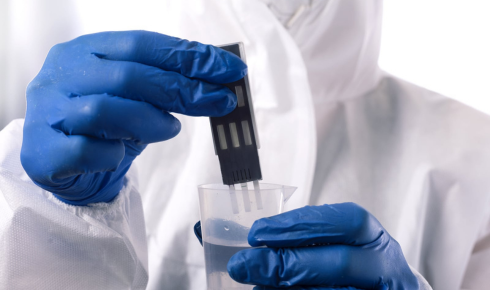
That’s where tools like portable lab analysis come into play. Instead of sending samples away and waiting days, these methods allow for on-the-spot insights. Quick, practical, and surprisingly detailed.
You get a snapshot of your water in real time—what’s present, what’s elevated, what might need attention.
And suddenly, you’re not guessing anymore.
The Small Signs Start to Make Sense
Once you’ve seen what’s in your water, those little annoyances start to connect.
The residue on your fixtures? Likely mineral content. That faint chlorine smell? A byproduct of treatment. The dryness after showers? Possibly a mix of both.
It’s not that these things are dangerous—they’re just… less than ideal.
Understanding the cause makes it easier to address. And that’s when the idea of improvement stops feeling vague and starts feeling practical.
From Awareness to Action
Here’s the thing: knowing what’s in your water doesn’t automatically mean you need a complicated solution.
Sometimes, a simple filter does the job. Other times, a more comprehensive system makes sense. It really depends on what the testing reveals.
The goal isn’t to overcorrect—it’s to respond appropriately.
That’s how you move toward having your water problems solved in a way that feels logical, not overwhelming. You’re not throwing solutions at a mystery. You’re addressing something specific.
And that difference matters.
The Quiet Benefits of Better Water
Improving water quality doesn’t usually come with a big “wow” moment. It’s more subtle than that.
Your water tastes a bit cleaner. Your skin feels less irritated. Cleaning becomes easier because there’s less buildup to deal with.
Even your appliances benefit. Less scale means better efficiency, which can extend their lifespan without you having to think about it.
These changes don’t demand attention, but they improve your daily routine in ways that are hard to ignore once you notice them.
Why Most People Delay Testing
If testing water is so helpful, why don’t more people do it?
Part of it is perception. Water feels like a constant, something that doesn’t need checking unless there’s a clear problem. And since most issues are subtle, they don’t create urgency.
Then there’s the assumption that testing is complicated or time-consuming. But with modern tools, that’s not really the case anymore.
In fact, it’s often quicker and easier than people expect.
A More Thoughtful Approach to Your Home
There’s something satisfying about understanding your environment a bit better. Not just accepting things as they are, but actually knowing what’s going on behind the scenes.
Water testing fits into that mindset.
It’s not about being overly cautious or analytical. It’s about making informed decisions—small ones that add up over time.
And when it comes to something you use every single day, that kind of awareness feels worthwhile.
It’s Not About Perfection
One thing worth mentioning—no water is completely perfect. Every source has its own characteristics. The goal isn’t to eliminate everything, but to bring balance.
To make your water work better for your home, your needs, your lifestyle.
And that starts with understanding.
Final Thoughts
If you’ve ever wondered what’s really in your water, that curiosity is worth exploring.
Not because you expect to find something alarming, but because knowledge gives you options. It turns uncertainty into clarity.
And from there, improving your water becomes less about trial and error and more about simple, thoughtful choices.
Because in the end, water isn’t just something you use—it’s something you live with. Every day, in ways both obvious and subtle.
And when you understand it better, everything else starts to feel just a little more in control.