Water is one of those everyday essentials we rarely think about until something feels different. Maybe your morning tea has an odd aftertaste, white marks keep appearing around the kitchen faucet, or the showerhead seems to clog more often than it should. You clean everything, carry on with your day, and then the same problem returns a week later. It’s frustrating, especially when you aren’t sure what’s causing it.
The thing is, water quality can vary considerably from one property to another. Minerals, sediment, plumbing materials, and other dissolved substances can influence the water that reaches your taps. Choosing the right treatment isn’t necessarily complicated, but it does require a little investigation before you start buying equipment.
Start With the Water You Already Have
Before comparing filters or treatment systems, pay attention to the signs around your home. White deposits on shower screens and kettles may suggest hard water. Reddish stains can sometimes indicate iron, while an unusual taste or smell may have several possible causes. These clues are useful, but they don’t provide a complete picture of water quality.
The source matters, too. Municipal water is generally treated before distribution, yet its mineral content and taste can vary. Private well water depends more heavily on local geology, groundwater conditions, and the environment around the well. Plumbing materials and household storage tanks can also affect water after it enters a property.
A water test helps replace guesswork with useful information. Depending on the source and the concern, testing may examine hardness, pH, iron, dissolved solids, bacteria, or specific contaminants. A basic hardness test won’t tell you whether water is free from every health-related contaminant, so choose a testing method that matches the question you’re trying to answer.
Once you have reliable results, it becomes easier to compare treatment options. You may discover that a simple adjustment is enough, or you may find that a dedicated treatment system would address a recurring problem more effectively.
Why Hard Water Can Be So Difficult to Manage
Hard water contains elevated concentrations of calcium and magnesium. These minerals are naturally present in many water sources, but they can leave deposits on taps, showerheads, glassware, and appliances. Over time, scale may accumulate inside water heaters and other equipment that heats water.
The effects aren’t always dramatic. Sometimes it’s just the extra time spent scrubbing a kettle or trying to remove cloudy marks from a shower screen. Soap may also lather less easily, leaving a film on surfaces or making laundry feel stiff. When these small annoyances happen every day, they can add up.
For households dealing with persistent hardness, water softeners may offer a practical solution. Conventional ion-exchange systems reduce calcium and magnesium by exchanging these minerals for other ions, commonly sodium. This can help limit scale formation and improve soap performance.
Still, softening has its limits. A conventional softener isn’t a universal purifier, and it doesn’t automatically remove bacteria, lead, or every dissolved contaminant. The right system should be selected according to the water test results and the household’s actual needs.
Before installation, consider water usage, available space, and maintenance preferences. Traditional softeners require periodic regeneration and salt replenishment, so ongoing costs should be part of the decision rather than an afterthought.
Improving the Water You Drink and Cook With
Some homeowners are less concerned about bathroom scale and more interested in the water they use for drinking, cooking, and filling reusable bottles. A dedicated drinking-water system can be a sensible option when testing identifies a concern or when the goal is to improve taste.
Depending on the water conditions, reverse osmosis drinking water systems may be worth considering. Reverse osmosis uses pressure to move water through a semipermeable membrane that reduces many dissolved substances. The performance depends on the particular system and the substances being targeted, so it’s important to review independent certifications and manufacturer documentation.
These systems commonly include prefilters to protect the membrane, with some models adding a post-filter to improve taste. Many are installed beneath the kitchen sink, although tankless designs and other configurations are available.
There are trade-offs. Conventional reverse osmosis systems produce some wastewater, and their filters and membranes require replacement. Storage capacity and flow rate matter, particularly in a busy household where several people may need water throughout the day.
Reverse osmosis isn’t automatically necessary for every home. If a simpler filter can address the identified concern, a more complex system may add cost without much practical benefit. The aim is to choose equipment that performs a specific job, not to install the most elaborate setup available.
When Treating Water Throughout the House Makes Sense
Some water-quality concerns affect more than the kitchen tap. Sediment may appear at several fixtures, certain tastes or odours may be noticeable throughout the property, or the incoming water may require treatment before it reaches plumbing and appliances.
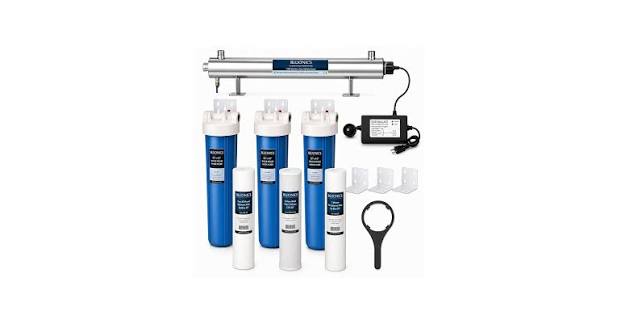
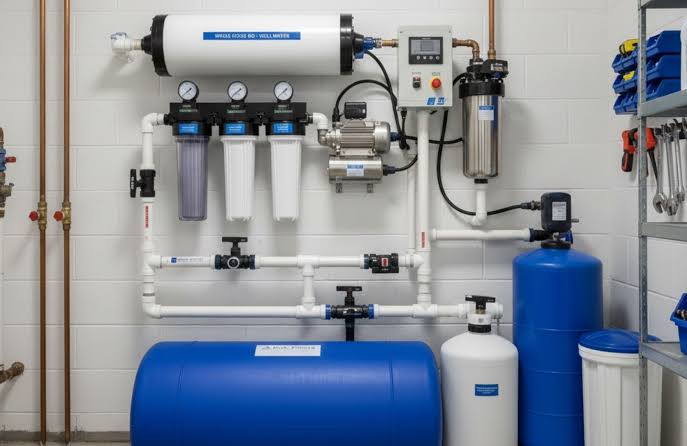
In these situations, whole-home water filtration may be worth exploring. A point-of-entry system treats water as it enters the property, allowing the selected treatment to serve multiple fixtures. Depending on the filter media and design, such systems may reduce sediment, improve certain taste and odour concerns, or address particular substances identified through testing.
The details matter. A sediment filter captures particles but won’t reliably remove dissolved contaminants. Activated carbon can reduce selected compounds, but it isn’t designed to address every microbiological concern. If a test identifies a need for disinfection or another specialised treatment, the equipment must be selected for that purpose.
Sizing is another consideration. A system needs to handle the household’s expected flow rate without creating an inconvenient drop in water pressure. The number of bathrooms, simultaneous showers, laundry loads, and kitchen use can all influence the choice.
Installation and Maintenance Are Part of the Plan
Even a suitable treatment system can disappoint if it’s installed incorrectly or poorly maintained. Equipment should be sized for the water supply, connected according to the manufacturer’s instructions, and positioned where filters and other components can be accessed easily.
Before purchasing, ask about installation costs, replacement parts, service intervals, and warranty coverage. Some systems need electricity or drainage, while others require regular salt or filter changes. These requirements can affect both convenience and long-term cost.
Keep a record of installation dates, filter replacements, and water-test results. If the water’s taste changes, pressure drops, or staining returns, investigate rather than assuming the cause is obvious. Sometimes the water source or plumbing conditions have changed, and further testing may be necessary.
Make an Informed Choice for Your Home
Better water doesn’t always require a complicated setup. Start by understanding your water source, identifying the concern, and arranging appropriate testing when needed. Then compare treatment systems based on verified performance, installation requirements, maintenance, and total cost.
Be cautious of claims that one device can solve every water-quality issue. Different technologies have different purposes, and a good recommendation should include a clear explanation of both benefits and limitations.
Ultimately, the right treatment system is the one that suits your household’s water conditions and everyday routines. With reliable information and regular care, you can reduce recurring water-related frustrations and make a practical improvement to one of the most frequently used parts of your home.