Water is one of those everyday necessities we rarely think about until something seems off. Maybe the kitchen faucet produces water with an unfamiliar smell, or the bathtub fills with slightly cloudy water. Sometimes, the change is subtle enough that you wonder whether you’re imagining things. Other times, it’s impossible to ignore.
For homeowners throughout Cedar Rapids and Eastern Iowa, understanding what influences household water quality is an important first step toward finding suitable treatment.
Rather than immediately purchasing a filter and hoping for the best, it makes sense to investigate what’s causing the problem. Different water concerns require different solutions, and a little knowledge can save considerable frustration and unnecessary expense.
Understanding the Disinfectants in Municipal Water
Municipal water treatment plays an important role in protecting public health. Water suppliers use disinfection methods to help control harmful microorganisms as water travels through distribution networks.
Two commonly used disinfectants are chlorine and chloramine, both of which serve important purposes but may contribute to noticeable tastes or odors in household water.
Some people barely notice these characteristics. Others find them distracting, particularly when showering, preparing coffee, or filling a drinking glass.
Activated carbon filtration can help reduce free chlorine, while chloramine generally requires appropriately designed filtration media and sufficient contact time.
Before purchasing treatment equipment, check which disinfectant your water supplier uses. Choosing equipment based on that information can make a meaningful difference in treatment performance.
Why Your Water Sometimes Looks Cloudy or Unusual
There’s something unsettling about filling a clear glass and discovering tiny particles floating inside it.
The presence of sediment or discoloration may be associated with suspended materials, plumbing corrosion, distribution system disturbances, or naturally occurring substances in groundwater.
Private well owners may encounter sand, silt, or iron-related concerns, depending on local groundwater conditions.
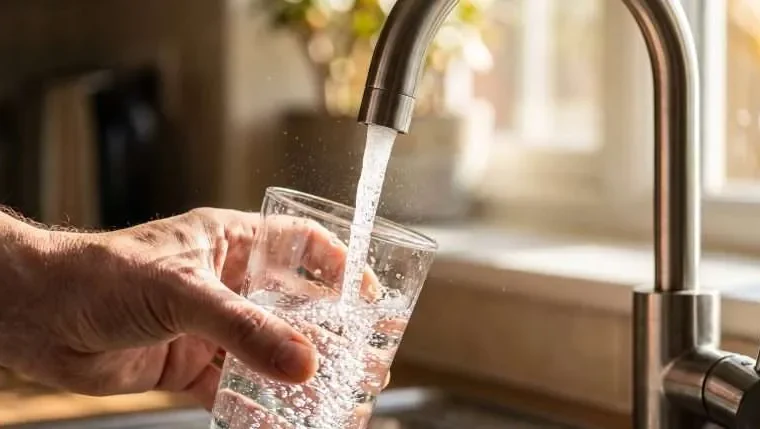
However, appearance alone cannot establish the exact cause. Temporary cloudiness can sometimes result from tiny air bubbles rather than suspended contaminants.
Persistent or sudden changes deserve further investigation, particularly when accompanied by unusual odors or flavors.
Appropriate testing can help determine whether sediment filtration, specialized treatment, or plumbing repairs are necessary. Getting to the root of the issue is far more useful than simply covering up its symptoms.
Treating Water Before It Travels Through Your Home
Installing a small filter on the kitchen faucet might improve selected aspects of drinking water quality, but what about the bathroom, laundry room, and other household fixtures?
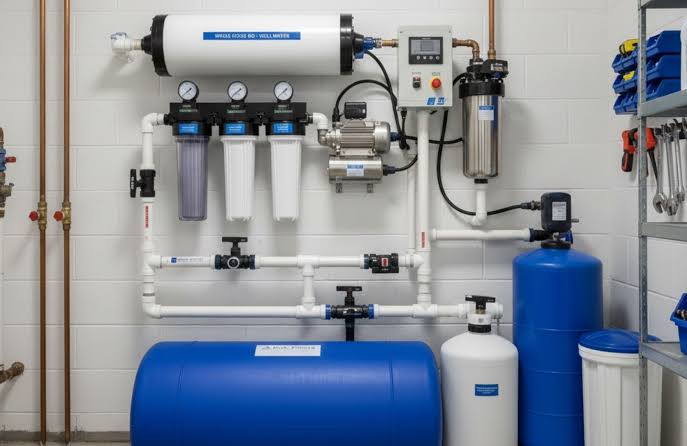
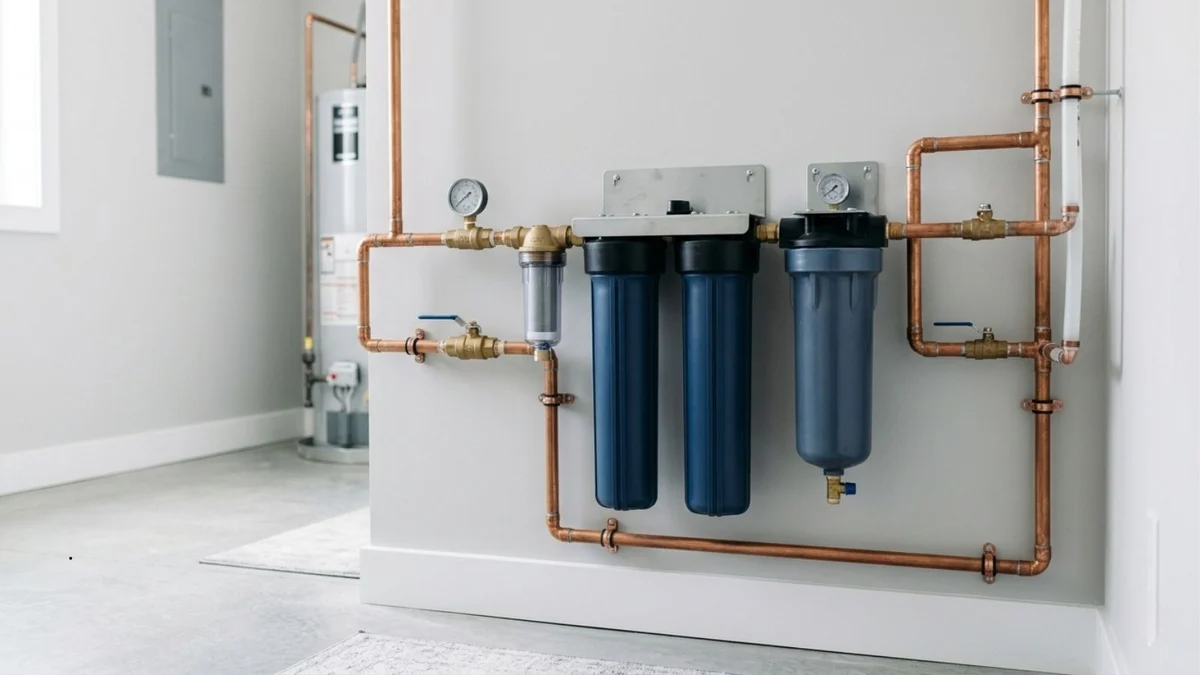
Properly selected whole-home water filter systems treat incoming water near the main supply line, allowing multiple connected areas of the property to benefit from centralized filtration.
Sediment cartridges can capture suspended particles, while activated carbon media may reduce certain chemicals associated with unpleasant tastes and odors.
Additional treatment components can be incorporated when testing identifies other concerns.
This arrangement can simplify household water management, particularly when similar problems affect several rooms.
The important thing is choosing treatment according to actual water conditions rather than assuming every household needs the same equipment.
Understanding the Difference Between Filtration and Softening
Water filtration and water softening are sometimes discussed as though they’re interchangeable. In reality, they perform quite different functions.
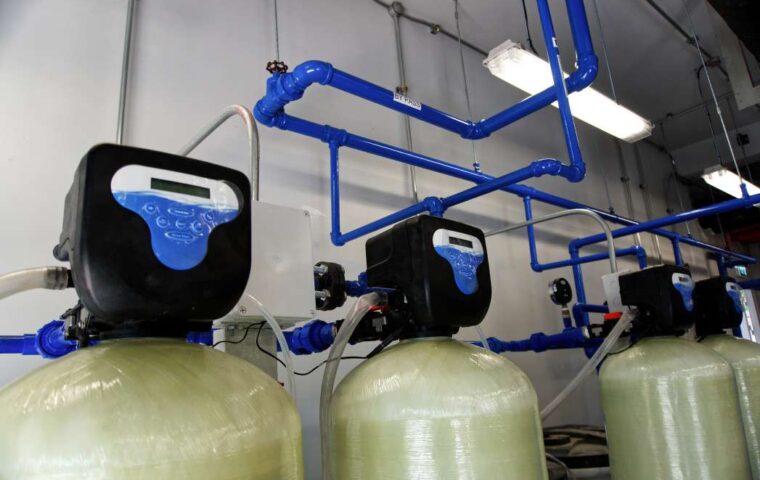
A sediment filter captures physical particles. Carbon filtration addresses certain chemicals and aesthetic concerns. Conventional water softeners reduce dissolved calcium and magnesium, the minerals primarily responsible for water hardness.
If your bathroom faucets develop stubborn white deposits, installing a basic sediment filter probably won’t solve the problem.
Similarly, a softener alone may not address noticeable disinfectant odors.
Some households benefit from combining treatment technologies, while others need only a single system.
Understanding these distinctions helps homeowners avoid purchasing equipment that doesn’t address their primary concerns.
Keeping Your Household Plumbing and Appliances in Mind
Most people don’t spend much time thinking about the water entering their washing machine or dishwasher. As long as everything works, there’s little reason to give it much attention.
However, suspended particles can accumulate inside appliance inlet screens, valves, and smaller plumbing components.
Suitable filtration helps reduce the amount of particulate material reaching connected equipment.
If excessive hardness is also present, separate softening equipment may complement filtration by limiting new mineral scale formation.
Although treatment cannot automatically repair existing damage, it can support a sensible preventive maintenance routine.
Considering how expensive household appliances can be to replace, paying attention to incoming water quality is a worthwhile precaution.
Choosing Equipment You Can Maintain Comfortably
A filtration system should make household life easier, not introduce another complicated responsibility.
Before installation, consider available space, household water consumption, incoming pressure, and replacement component costs.
When consulting a provider such as Waterhouse Water Systems, ask about documented treatment capabilities and recommended maintenance schedules.
Filter cartridges eventually become clogged, and carbon media has limited treatment capacity. Removing disinfectant residual throughout the home also makes proper equipment hygiene particularly important.
Keep a record of maintenance dates and arrange appropriate follow-up testing when addressing specific contaminants.
Remember that pleasant taste and clear appearance alone cannot establish drinking water safety.
Bringing Greater Confidence to Your Eastern Iowa Home
Improving household water quality doesn’t need to be an overwhelming project. Start by understanding your supply, identify your most noticeable concerns, and choose treatment that offers practical benefits.
For families throughout Cedar Rapids and Eastern Iowa, the rewards may appear in familiar moments — enjoying a relaxing shower, preparing dinner, or noticing fewer particles collecting around household fixtures.
Water is woven into almost every part of daily life, yet its quality often goes unnoticed until problems arise.
Giving it thoughtful attention today can help make your home more comfortable and manageable for years to come. Sometimes, a worthwhile household improvement begins with something as ordinary as turning on the faucet.